


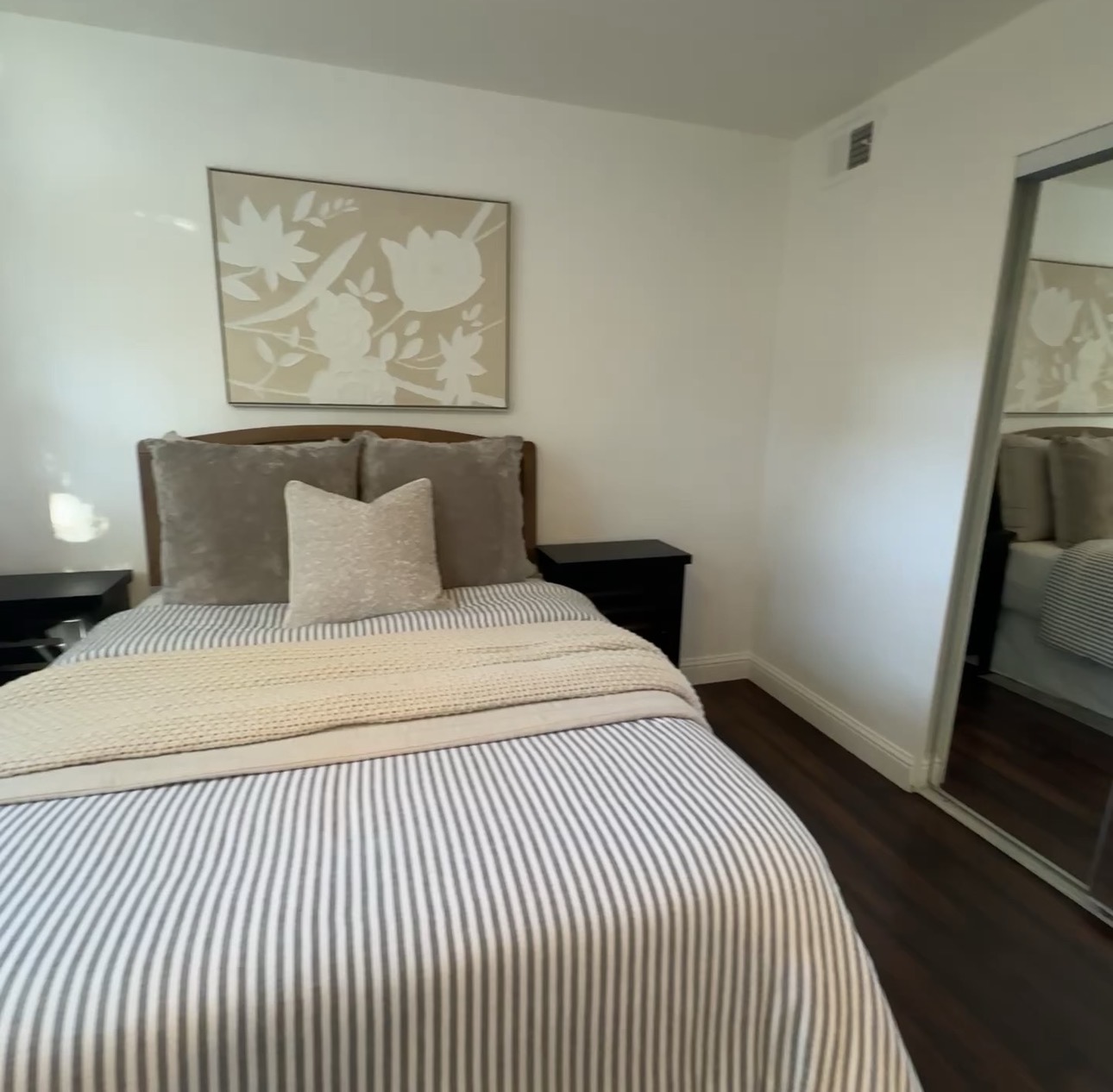
Twelve homes in Hidden Valley Lake have been on the market for 90 days or longer.
The longest has been waiting 245 days.
That’s eight months of carrying costs, yard work, showings, price conversations and wondering why somebody hasn’t simply fallen in love with the house yet.
Five of those homes have already reduced their asking prices. One has come down by $60,000.
Here’s the important part:
These are not necessarily bad houses.
Homes sit for all kinds of reasons, but after years of watching this market, I see the same handful of problems over and over again. Usually it isn’t one catastrophic mistake. It’s a series of small decisions that quietly drain momentum from a listing.
And in real estate, momentum matters.
Here’s how sellers accidentally join the 90-Day Club — and how to stay out of it.
1. The Price Starts the Conversation
Pricing isn’t a wish. It’s a strategy.
The first question buyers ask themselves isn’t whether your house is lovely. It’s whether the house makes sense compared with everything else they can buy for the same money.
When the price is noticeably ahead of the market, buyers often don’t negotiate immediately.
They wait.
Then the listing accumulates days on market, a price reduction appears, and buyers begin wondering what everyone else saw that they didn’t.
A well-positioned home can create urgency.
A home chasing the market downward can create hesitation.
That’s why I would rather have the uncomfortable pricing conversation before we list than six weeks afterward.

2. Occupancy Matters More Than Sellers Think
Selling a tenant-occupied property can absolutely be done.
But it changes the strategy.
Buyers need to be able to see the house easily, understand its condition and imagine themselves living there. That gets harder when showings have to work around another household’s schedule and belongings.
Sometimes selling with tenants makes sense.
Sometimes waiting until a property is vacant gives us a much stronger opportunity to clean, repair, stage and market it properly.
That decision should be made intentionally — not discovered after the listing goes live.
3. Small Repairs Become Big Questions
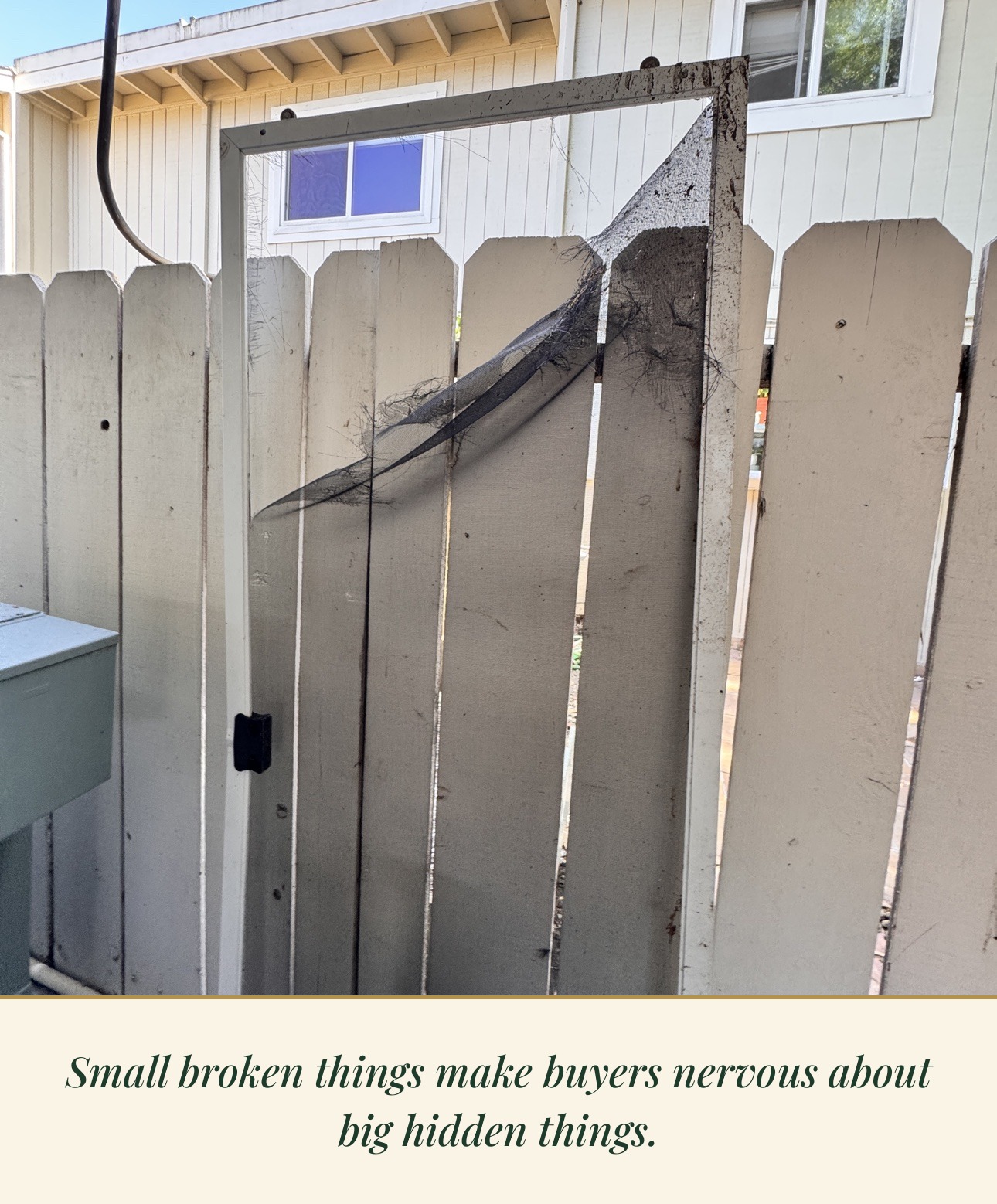
A loose faucet is a loose faucet.
Until a buyer sees it.
Then it can become:
What else hasn’t been maintained?
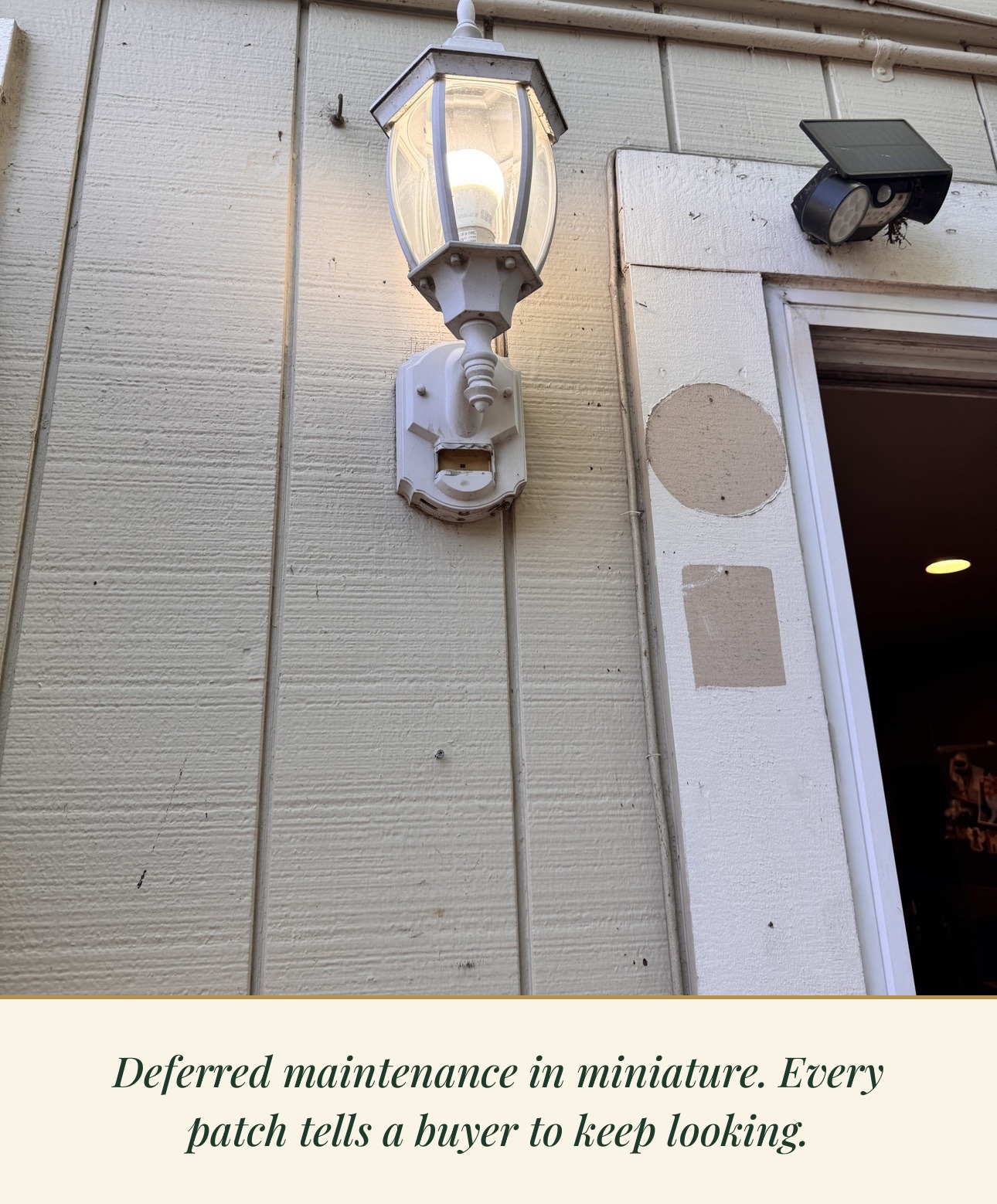
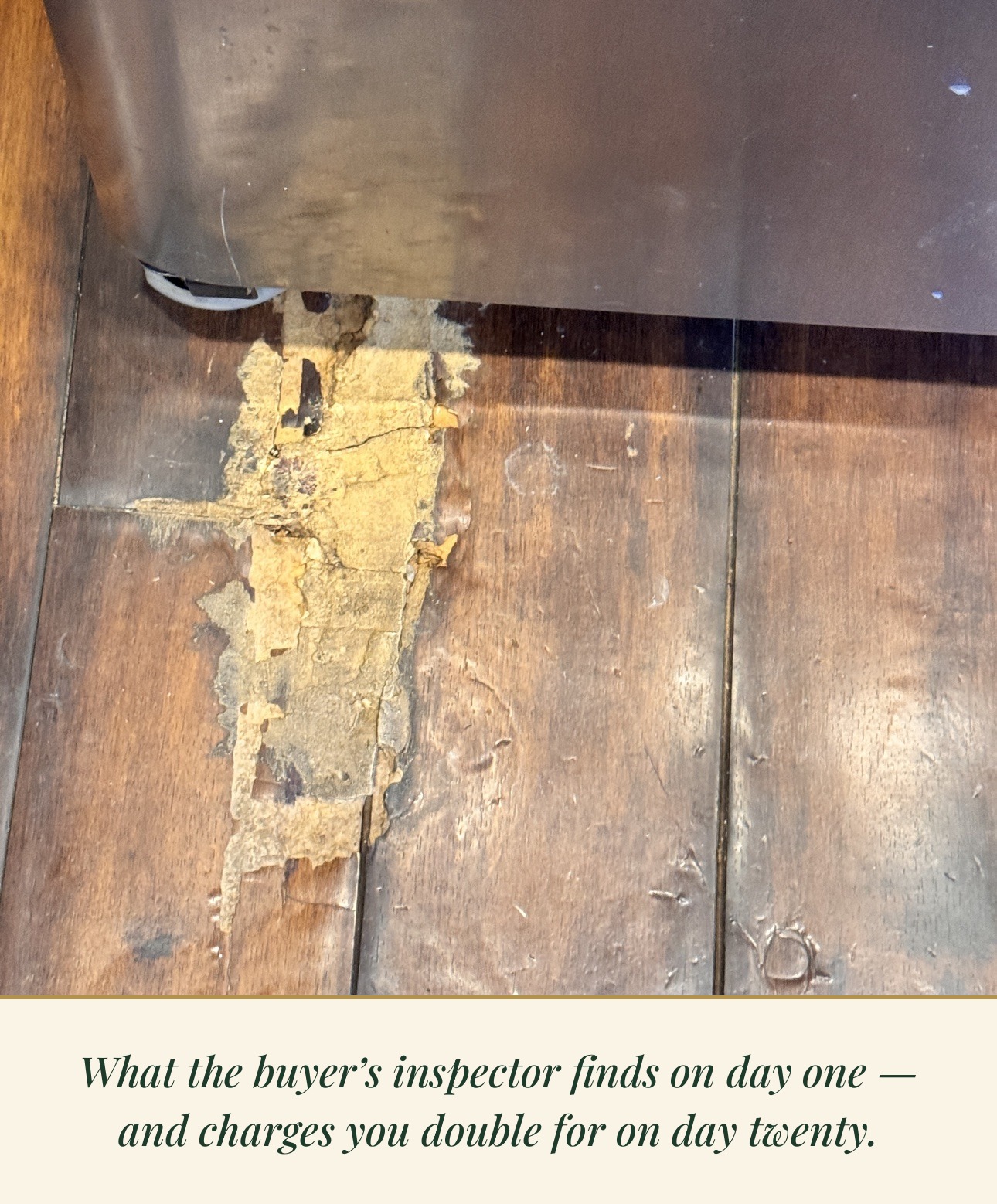
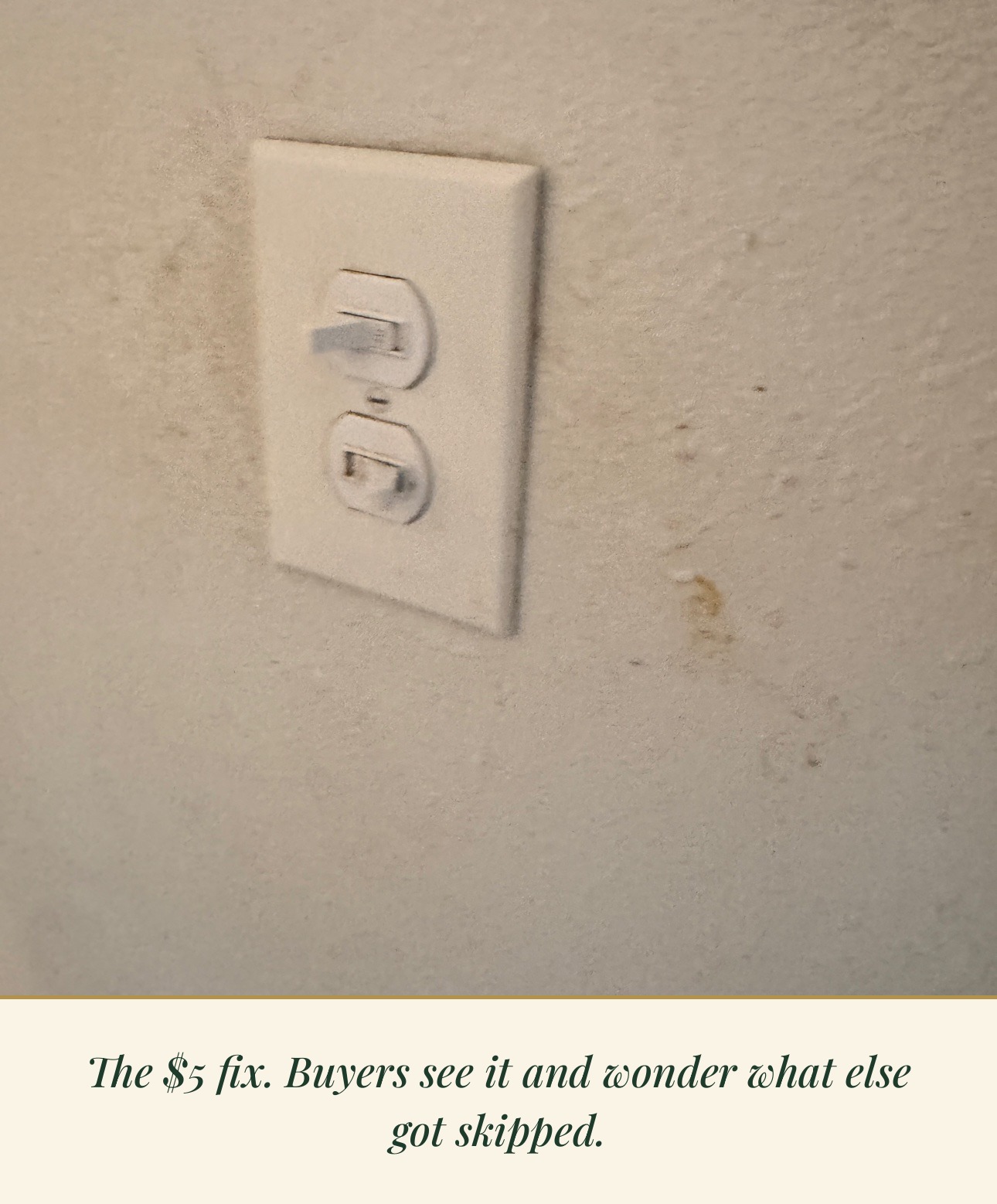
That’s the problem with deferred maintenance. Buyers aren’t only calculating the cost of the visible repair. They’re trying to calculate the risk of what they can’t see.
Taking care of the obvious items before listing can make the entire house feel better maintained.
And that changes the negotiation.
4. Paint and Flooring Do an Extraordinary Amount of Work
You don’t necessarily need a remodel.
Often you need editing.
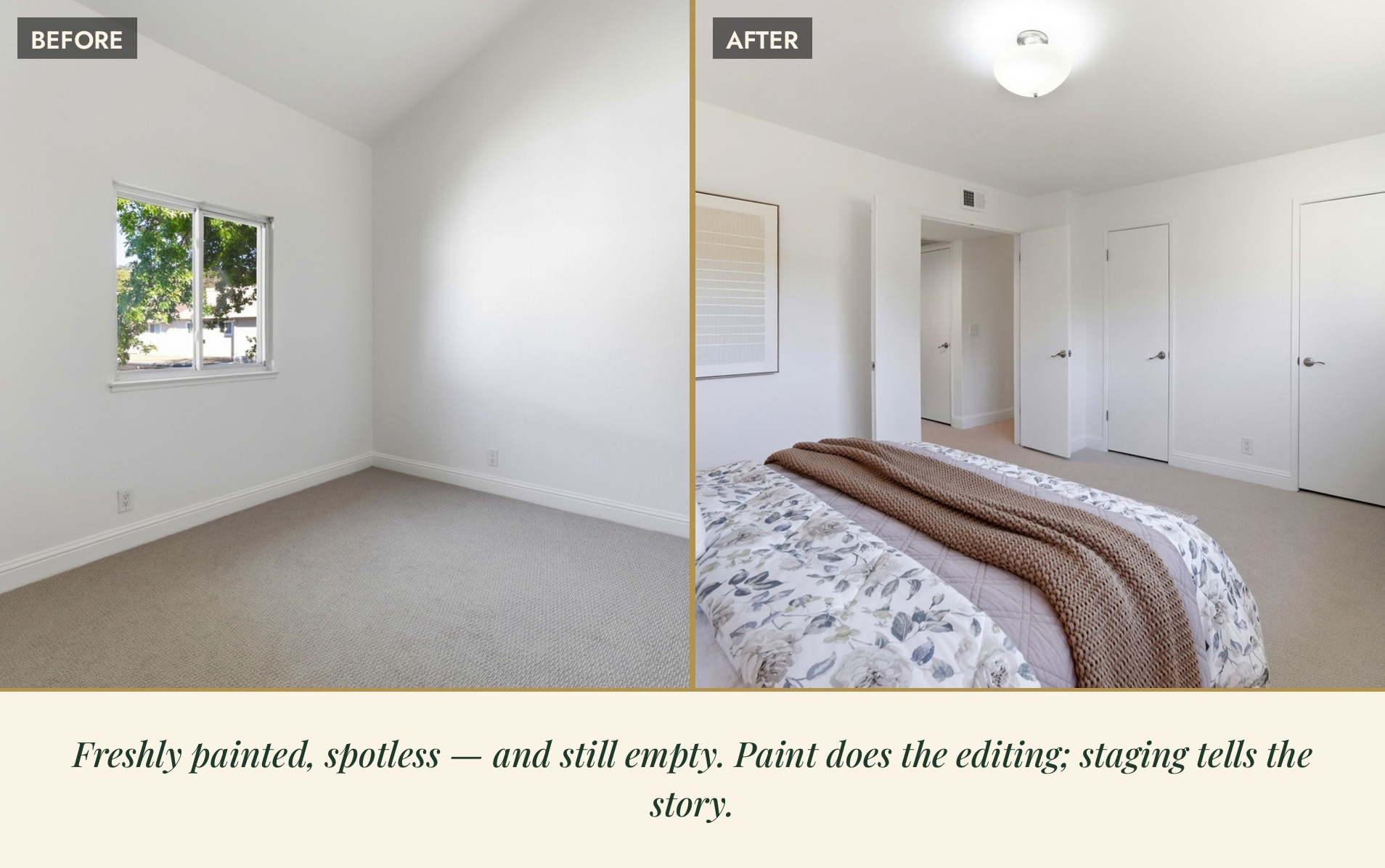
Fresh paint, clean flooring and removing visibly worn finishes can completely change how a house photographs and feels when someone walks through the door.
Buyers don’t experience a house as a spreadsheet of improvements.
They experience it emotionally.
A clean, cohesive interior says:
I could live here.
5. Empty Isn’t the Same as Spacious
This surprises sellers.
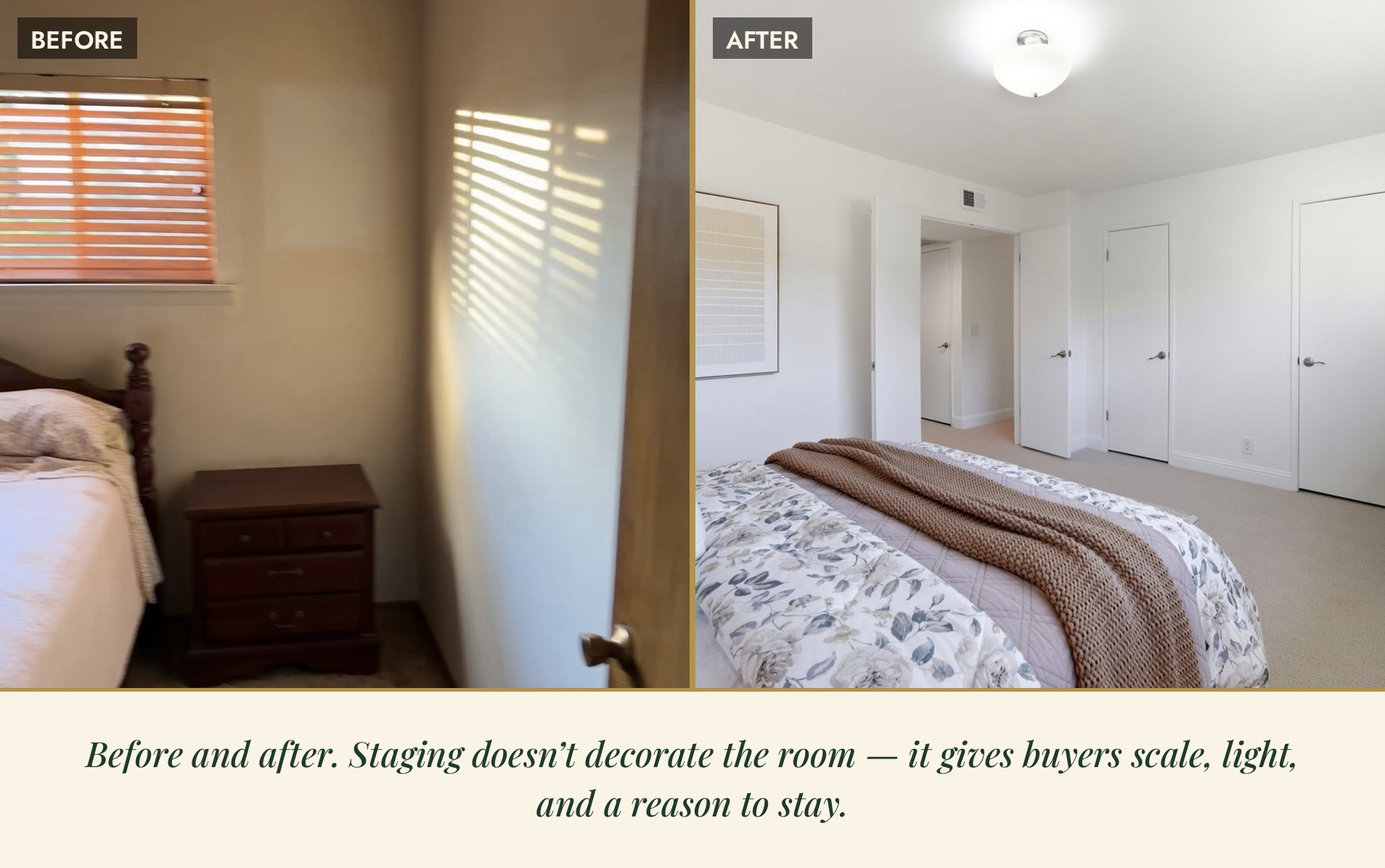
An empty room often photographs smaller because there is nothing giving the eye a sense of scale.
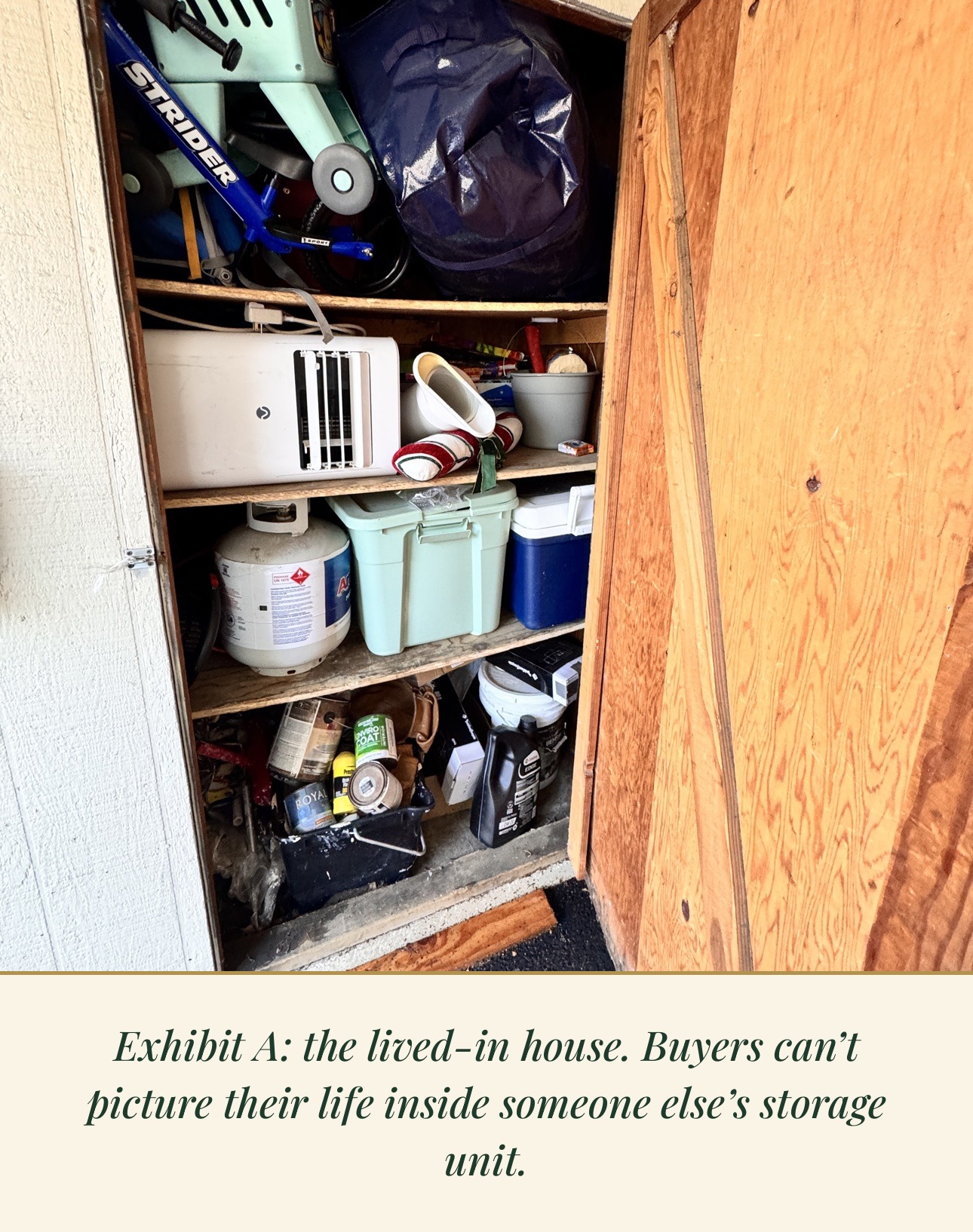
At the other extreme, an overfilled room can make a perfectly good house feel cramped.
Good staging lives somewhere between the two.
It isn’t decorating for decorating’s sake.
It helps buyers understand the architecture, the size of the rooms and how the house could actually function.
6. Your First Showing Happens Online
Long before a buyer walks through your door, they’re looking at your house on a phone.
And they’re moving fast.
That means photography, image order, lighting, staging, video and the opening image of the listing matter enormously.
A home can be wonderful in person and still lose buyers before they ever schedule a showing.
For a major financial asset, photography isn’t where I want to save money.
7. Don’t Make Buyers Work Too Hard to See It
Buyers have choices.
If one house requires complicated scheduling and another can be seen this afternoon, guess which one may get shown first?
Of course sellers need reasonable boundaries.
But within those boundaries, accessibility matters.
Every showing is an opportunity.
And sometimes the buyer who asks to come at the most inconvenient time is the buyer who writes the offer.
8. Protect the First Two Weeks
The beginning of a listing is special.
It is new.
Agents receive alerts. Buyers who have been waiting for something like it notice. People who have already toured everything else suddenly have something new to consider.
You don’t get that moment twice.
That’s why the house, price, photographs, disclosures and showing strategy should be ready before the listing launches.
Don’t use the first two weeks to figure out what should have been figured out beforehand.

9. Don’t Choose Representation on Price Alone
Different sellers need different levels of service.
But before choosing an agent primarily because of the fee, ask what you’re actually receiving for it.
Who is handling the photography?
Who is helping prepare the property?
How will the home be positioned against its competition?
Who is following up after showings?
What happens if the listing isn’t getting traction?
What is the strategy if an inspection or appraisal creates a problem?
The cheapest way to list a house isn’t necessarily the least expensive way to sell one.
10. Find the Problems Before the Buyer Does
One of the most useful things a seller can do is learn about their own house before negotiations begin.
Depending on the property, that might mean a home inspection, pest inspection, septic information, well testing or gathering records for improvements and repairs.
You don’t have to make an old house perfect.
Buyers aren’t expecting perfection.
What they dislike are surprises.
Knowing what you’re selling gives us the opportunity to repair what makes sense, disclose what doesn’t and price the house with our eyes open.
The Real Problem With the 90-Day Club
Days on market aren’t fatal.
Some properties legitimately take longer to sell.
But the longer a home sits, the more leverage can begin shifting toward the buyer.
That’s why my favorite seller conversations happen before the sign goes in the yard.
We can look at the competition.
We can look at what buyers have actually been paying.
We can decide what deserves fixing and what doesn’t.
We can figure out whether staging makes sense.
And most importantly, we can decide how we want your house to enter the market — rather than trying to rescue it afterward.
If you’re thinking about selling in Hidden Valley Lake, let’s talk price before we talk paint.
And if you’re a buyer who’s fallen in love with a Hidden Valley Lake home that may be overpriced, call me. The commute may not be the stopper.
I have the comps. Lets look and see.
Heather Wakefield
Associate Broker | REALTOR®
Luxe Places International Realty
DRE #01924828
707-872-7744 (tel:707-872-7744)
http://www.HeatherWakefield.com
Market statistics are based on available listing data at the time of publication and are believed reliable but are not guaranteed. Market conditions and listing status can change quickly.